Wednesday, July 11, 2012

Ship the Outsource Debate Overseas

Outsourcing (or offshoring) seems to be the political battleground of the week. Both presidential campaigns have launched into a finger-pointing offensive of claiming their opponent has contributed to the shipment of American jobs overseas. The outsourcing debate was sparked by an investigation into and a series of poltical attacks at Romney's activities at Bain. The Republican campaign retorted with recriminations regarding the handling of stimulus money.

While we'll leave the fact-checking to the newspapers, the entire debate is somewhat ridiculous, particularly from Romney's perspective—the supposed voice of economic reason during this electoral season. It is based on the ludicrous proposition that outsourcing jobs is an absolute negative for the U.S. economy. In simplistic political-speech, which assumes Americans are just too stupid to understand basic economics, the argument holds that when a company either hires a foreign company to perform a specific task or moves operations abroad that it is a unilateral loss for the domestic economy.


The first time I saw this "negative" ad from the Obama campaign, I could not help but think that the gist of the comments was true and Romney should proudly own it.

But such arguments ignore basic economic truisms that are taught in any introductory economics course. Trade, whether domestically or internationally, benefits everyone. The simple concept of comparative advantage—the situation in which one producer can produce a good relatively cheaper than its competitors—underpins this logic. By definition, every producer will have a comparative advantage, thus yielding an economic logic for specialization and trade.

In simple language, this is precisely what motivates outsourcing and offshoring. Other countries have a comparative advantage in labor. It is thus relatively cheaper for them to "produce" labor. Since they are comparatively better at labor, trade frees up American resources to do what we are better at (such as research and development). We can then, for instance, trade our research for their labor, creating products that benefit both sides of the transaction at a cheaper price. This specialization and trade helps both economies grow.

The real world is naturally more complicated (short-run costs of reallocating resources are very real), but the essence of the argument holds. Outsourcing and offshoring are good for the U.S. economy (if they are done without distorting effects of government meddling). But one must look at the entire effect, not just the outsourced job to appreciate this dynamic.

So how does outsourcing help? An outsourced job means that a domestic company can now get the work done for a cheaper price (it would not outsource the job if it was more expensive to do so). This frees up resources (money) to put to other uses. A company can either cut costs, passing along savings to consumers (maybe in an attempt to increase market share) who can then save or purchase more, or reinvest the saved money into expanding the business. In truth, both probably occur and both help grow the economy. As is usually the case, a growing economy creates new jobs, most likely in sectors in which the country has a comparative advantage.

If one thus looks at the economy on a holistic level, a cheaper input to production (cheaper labor abroad) will generally help an economy grow and create more jobs. A smart business leader, economist, or president will acknowledge that it is best to have the most efficient producer or worker do the job, regardless of national borders or any other consideration. Outsourcing is thus one piece of a broader economic puzzle, which allows an economy to operate at its highest and most efficient level.

But our politicians never try to explain this basic economic fact. Whether they think Americans are unable to comprehend such simple economics or are they beholden to special interests, both the left and the right seem to be stuck to a pseudo-protectionist argument. Arguably, much of this tenacity to the outsourcing-is-evil argument is due to political expediency. It is much easier, in a world of sound-bites, to make a a simple accusation of sending jobs to India, than explain an economic principle. But such expediency is damaging, not only by dumbing-down political discourse but by empowering certain groups to take-advantage of such language to further their own narrow desires (think unions and noncompetitive industries who want protection).


The Romney campaign would be wise to take a new angle in this debate. Much as New Jersey Governor Chris Christie does, Romney need to take an approach of separate, own, and educate. He needs to separate the fact from fiction, dismissing Obama's ridiculous conclusions about outsourcing, proudly own what he has done, and educate the people on why such actions are good. In other words, Romney has to stop looking like he is running from some greedy business transactions and start explaining how a smart economy works.

Such a change in tactic would not only benefit the United States by pushing our economic policy toward sound principles, but greatly help the Romney campaign. He'll regain the image of a responsible and educated economic steward, earn respect for standing up to smear campaigns and distortions of economic facts, make Obama look like the economic lightweight he is, and rise to a presidential level. It is a novel political strategy, but one that if properly employed will reap tremendous rewards for a candidate who is too often criticized for lacking a backbone.

Thursday, July 5, 2012

The Principles of the Past

In celebrating Independence Day, E.J. Dionne questions the desire of many to base their policy choices on some notion of the "'original' intentions of the Founders." Writing in the Washington Post, he argues that too many people (presumably conservatives) rely upon their modern understanding of history, as a snapshot, to argue for certain policies, rather than acting as "we the people" best see fit today. He criticizes American historicism by writing:
[I]t is dangerous to turn the Founders into quasi-religious prophets who produced a text more like the Bible or the Talmud. It’s neither. It is a governing document that was the product of compromises and arguments....

We do a disservice to ourselves and the Founders alike if we take them out of history and demand that they settle arguments that we ought to settle on our own.

The Founders, after all, were not timid men bound by the past. They did something bold and adventurous. In creating a novel form of government, they were thinking and acting anew.

While Dionne eventually goes too far by essentially stripping the Constitution of any real meaning and advocating for an expansive government than can do anything the people (one can only assume he means a crude mass of majoritarian democracy) want, he does raise a valid point about the Right's overemphasis of a historical moment and the great men that shaped the country at that time. Indeed, while it is necessary to learn from history, it is not the past but the principles of the proper role of government that we must rely upon to shape policy.

The problems with an overly heavy reliance on the Founders' "vision" are manifold. First, it is unthinking. On a basic level, it ignores the nuances of policy debates and circumstances during the founding of our country. As any basic reading of the founding of the United States will reveal, many of the Founders had different beliefs. However, on a deeper level, such backward-looking reliance creates a situation where blanket ideas are deified without any understanding of why they are appropriate or how they properly function. This leaves proponents of constitutionalism stultified, unable to defend their perspectives with anything but the simplistic, "This is what the Founders established for us."

A related problem, is that this perspective handicaps the propagation of a constitutionalist ideology. There is minimal debate in public circles about the proper role of government. The Left has defined, as Dionne unquestionably advocates, a activist model of government as the solution-finder extraordinaire. Many on the Right have an enfeebled response of "small government because the Founders said so"—an argument that, as popular discourse shows, carries little sway.

Furthermore, the reliance on the historical argument for limited government has crowded-out the intellectual and philosophical one. Not only does a historical justification fly against the impetus behind the founding of this country, which was forward looking, but it severely encumbers the more proper, strong, and justifiable arguments. This often prevents the Right from meaningfully presenting solutions to very modern problems (whether in the government or within other, often waning, institutions), a situation that diminishes the force of the Right's arguments.

This can lead to a number of dead ends for proponents of limited government. In one regard it can devolve into a fight, relegated to the historians and irrelevant to most Americans, over history. Worse it can create a perception of a divide between the "thinking intellectuals" who are forward-looking and the reactionaries who do not want to address modern problems. Whether this classification is fair or not is irrelevant—it is unfortunately a powerful mainstream belief. (Why are the halls of higher learning, media, and many youth so pulled by the progressive ideology?) By de-intellectualizing the founding principles of the United States, the Right has allowed the progressive ideology, with its concomitant view of an expansive role of government, to dominate the realm of solutions.

Such an argument does mean dismissing the past. There are many lessons to be learned from history. The Founders clearly designed a great system and helped elucidate a number of profound principles that form the basis of our government. But they, knowingly, were unable to foresee everything that the future could hold. Instead, as the Founders themselves did, the Right must guide its policies on principles. It must reinvigorate the intellectual arguments that underpin classical liberalism (eg. the political philosophy of modern conservatives). While these principles may have historical roots, they are not themselves history but are timeless. The forward-looking application of the principles of limited constitutional government can serve as a worthy challenge to the progressive ideology that has become dominant, thus not only helping to shape the form and nature of our government but winning support from swathes of society that have been deemed lost.

Wednesday, June 6, 2012

The Language of the Left

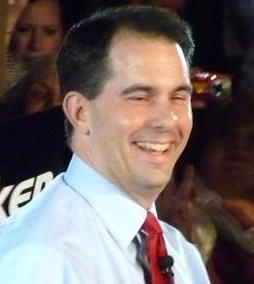
Congratulations is due to Wisconsin's Republican Governor Scott Walker for not only becoming the first governor to ever survive a recall election but also by doing so in an overwhelming manner. Contrary to expectations and exit polls, Walker trounced Democrat rival Tom Barrett 53% to 46%. The recall election, which was the third in United States history, was prompted by Democratic and union angst over Walker's reforms that limited collective bargaining for public unions. But while the Republicans clearly won the political battle yesterday, they are slowly losing a broader war.


Republicans have been allowing the left to set the terms and terrain for debate over a wide array of issues. The right has continually failed to challenge underlying assumptions and language used by the media, pundits, and politicians on both sides of the aisle. This has allowed, even helped, the left to determine a battleground that is less defensible for the right by presupposing certain facts and language that should be readily open to challenge. The right, for the most part, seems to be oblivious to this fact—an effect that is slowly undermining the philosophy of the right, their political goals, and eventually support for a conservative agenda.

This issue has been painfully present throughout the Wisconsin recall election. Specifically, the debate has been framed as an issue of collective bargaining rights. The Washington Post stated, "The passions that fueled a long fight over union rights and Wisconsin’s cash-strapped budget brought voters out in strong numbers Tuesday to decide whether to recall Gov. Scott Walker [emphasis added]." The New York Times used similar language, "[V]oters began streaming into polling places on Tuesday to decide whether to remove Gov. Scott Walker, the Republican whose decision to cut collective bargaining rights for most public workers set off the fight [emphasis added]." CNN parroted, "Gov. Scott Walker [is] a Republican hero for pushing austerity measures that stripped collective bargaining rights from most public unions [emphasis added]." The supposedly right-leaning Wall Street Journal fell into the same trap: "The recall was triggered by a backlash to a law Mr. Walker signed in March 2011, two months after taking office, that forced government workers to pay for more of their pension and health-care benefits while also cutting most of their collective-bargaining rights [emphasis added]." Even the hated "right-wing propaganda" from Fox News used rights language: "The effort to recall Walker began shortly after he was elected in 2010 and began cutting the state’s huge budget shortfall by holding down taxes and removing collective-bargaining rights for unions representing state employees [emphasis added]."

While at first glance this may seem trivial, the nearly complete use of rights language is packed with assumptions—assumptions that validate the left's political philosophy and make it exceedingly difficult for Republicans to reorient the country's drift. Walker's win was aided by a number of factors—unmanageable state fiscal conditions, distaste with the concept of recall elections, and the poor economy—that may not exist in the future. However, without the presence of these factors, the underlying problem—the pernicious effect of collective bargaining by public sector unions—arguably may not hold electoral sway in future political climates, particularly if the right is unable able to correctly elucidate the issue.

The pervasive use of "rights" language is the crux of the problem. By labeling collective bargaining a right, the left is able to incorrectly frame the debate and mop-up voters who are offered a false understanding of the issues. It leaves the right with a reduced tool-kit to persuade voters, thus handicapping their arguments and their efforts. Republicans have only been able to go after the pernicious effects of public unions during an economic downturn because the employment of rights language has prevented them from successfully arguing against the innate demerits of public sector unions. They have thus been unable to illuminate the problems of collective bargaining absent economic woes, preventing the advancement of a just policy that should be easily supportable even during economic booms. By using the language of the left, the right is providing the unions and the Democrats with a subtle but lasting win. They are allowing collective bargaining to be incorrectly defined in leftist terms, as a right—a concept that is held to be sacred to most Americans and something that people have been striving to protect for generations.

According to the Stanford Encyclopedia of Philosophy right are defined in the following manner:
Rights are entitlements (not) to perform certain actions, or (not) to be in certain states; or entitlements that others (not) perform certain actions or (not) be in certain states.

Rights dominate modern understandings of what actions are permissible and which institutions are just. Rights structure the form of governments, the content of laws, and the shape of morality as it is currently perceived. To accept a set of rights is to approve a distribution of freedom and authority, and so to endorse a certain view of what may, must, and must not be done.
In other words, rights are entitlements that individuals can justly make a claim on. A government that strips its citizens of their rights is unjust and has exceeded its authority. This is a fact that is recognized by most Americans. The United States has a long history of promoting and defending rights. Even if most Americans agree with Governor Walker's policies, by labeling them an attack on collective bargaining rights, many Americans are left with a level of discomfort, an internal cognitive dissonance between a policy that innately feels correct and an attack on an institution that has high value.

Such internal dissonance, even if subconscious, yields a substantial win for the left, especially among younger, more idealistic voters. It not only compels some to vote with their "hearts," but generates a space for political arguments that misconstrue the facts. Political battles can be won and lost, but by defining the framework in which battle is conducted, the left wins the long-term war. Through this process the left is able to successfully define how future generations will think.

The problem is fortunately easy to rectify. Republican politicians and pundits must be aware of the language they use and they need to clarify the (often unthinking) misuse of language by the media and other public figures. Collective bargaining rights need to be re-framed as what they truly are: collective bargaining privileges (or more benignly collective bargaining). This will, at minimum move the debate from one over whether it is acceptable to strip certain rights from public sector union members to one over whether these powers are rights or privileges. At best, a complete swing in language will move the battleground to more friendly terrain (and correct terrain in the eyes of this blog) where collective bargaining powers will be justly classified as undue privileges and thus much easier to curtail.[1] (who would stand for giving a special interest privileges at taxpayer expense?)

By changing the framework of debate, Republicans will have an easier time presenting their arguments, putting the Democrats on the defensive, and undercutting the ability for the left to portray such sensible reforms as undermining anyone but a narrow special interest. But if the right is not careful, as has unfortunately been true for decades, the left will continue to win the war of language, thereby slowly undermining the principles of this country.


Note:
[1]Collective bargaining, especially by public sector unions, is unquestionably not a right. Collective or group rights in general are hardly defensible. An understanding of the proper role of government does not leave any space or philosophical justification for such a right. While arguments may be made for the utility of collective bargaining in some instances and at some times (possibly, more so in the private sector with truly commoditized services that lack adequate government protections for labor), they cannot be made in rights language. Other justifications must be employed to defend collective bargaining, which is exceedingly difficult. This is why the left has successfully fought to define many of its political goals over the past decades, in terms of rights language. It is much easier to defend a right (and some in the Civil Rights era were clearly violated) than rely upon another less potent and universal defense. But the abuse of the concept of right has gone too far, and is (and has been) undermining  the fabric of the American political system.

Tuesday, June 5, 2012

@ FutureChallenges: The American Way and Healthcare

My newest article at Future Challenges, "The American Way and Healthcare," explores political economy in light of the health insurance debate in the United States. Arguing that an improper understanding of the proper role of government is at the root of the health insurance debate, the article briefly outlines the current, generally false, understanding of a government's role and what it should be instead. It then explores a number of pernicious effects that such misapplication of government has. While not offering a third solution (which I have done elsewhere), the article argues that by failing to explore the proper role of government, American society has been left with two poor choices: the status quo or a "big government" solution. A reevaluation of the true purpose of government will go a long way toward not only allowing government to flourish in its proper place but also freeing-up creative impulses to solve many real problems (such as the dismal American health system) in more appropriate forums.

The article states:
Healthcare, or more aptly the provision of health insurance, has been an increasingly contentious issue in American politics, particularly over the past three years. Since the passage of Obamacare in 2010 to its potential repudiation by the Supreme Court following the forthcoming judgment this summer, American politics have become infused with this intractable problem.

There is little doubt that the current American system—a bastardized semi-competitive private monstrosity that is enfeebled by regulations, restrictions, and complications—is a disaster. It is expensive, inefficient, and unable to provide reasonable access to many Americans.[1] This has lead many on the American left, and observers from across the Atlantic, to advocate for a government solution.

However, while some champion Obamacare—the current administration’s healthcare reform bill—as a step in the right direction, many across the political spectrum find it has failed to provide an ideal solution, albeit for different reasons. Many on the left feel it does not go far enough, pining for the type of public system that exists in numerous European countries. In contrast, the right has castigated it as a tremendous overreach of government authority and responsibility, but has, as a whole, offered few alternate solutions.

That a revamping of the system is needed seems to be beyond question; however, very little thought has been given to what is the proper forum for such change. The knee-jerk reaction, as is unfortunately all too common in American society, is to turn to the biggest and most powerful institution—the federal government—to solve such intricate problems. This has left Americans, at least in the popular media, with two choices: massive government involvement or the status quo.

The remainder of the article can be accessed at Future Challenges.

Tuesday, May 8, 2012

There Is No 1%

In a recent interview, the New York Times sat down with businessman Edward Conrad to discuss the merits of the American economic system. Conrad, a former employee at Bain Capital, friend of Mitt Romney, and author of the upcoming book "Unintended Consequences: Why Everything You’ve Been Told About the Economy Is Wrong," came out swinging with a powerful defense of the United States' capitalist economy and the so-called 1%.

Conrad must be given credit for both a sound economic defense of the American system and for unabashedly standing up to the onslaught against the core economic principles that have defined the United States for generations. In a financial and economic discussion that is defended as "genuinely fantastic" even by prestigious leftist economists, Conrad outlines how the accumulation of wealth allows investment that proportionally helps everyone.

Conard understands that many believe that the U.S. economy currently serves the rich at the expense of everyone else. He contends that this is largely because most Americans don’t know how the economy really works — that the superrich spend only a small portion of their wealth on personal comforts; most of their money is invested in productive businesses that make life better for everyone....Conard concludes that for every dollar an investor gets, the public reaps up to $20 in value. This is crucial to his argument: he thinks it proves that we should all appreciate the vast wealth of others more, because we’re benefiting, proportionally, from it.

Essentially, he argues that, despite much opposing popular sentiment, there is not anything wrong with the perceived wealth gap in the United States. In fact, it seems he argues the opposite.

A central problem with the U.S. economy, he [argues], is finding a way to get more people to look for solutions despite these terrible odds of success. Conard’s solution is simple. Society benefits if the successful risk takers get a lot of money.

While to the interviewer's chagrin, Conrad does not delve into some serious counterarguments, such as rent-seeking, his economic arguments are sound and convincing. If one buys his logic, as is hard not to do, the Occupy Wall Street crowd are simply fools who are naively injuring themselves.

Nevertheless, Conrad's argument implicitly accepts leftist (socialistic) assumptions through his defense of the so-called 1% by highlighting their provision of a social good. He attempts to refute the charge that the high income and wealth of the rich is somehow denying the poor of what they are due. However, despite the clearness of this analysis, he is making the wrong argument. He is battling the left (and the populist right) on their battleground—generally a woeful proposition—by accepting two significant, albeit it wrong, assumptions.

First, his argument accepts that the divide between the 99% and 1% is real, that there is some fundamental gap that separates the two groups. But such a contention is insupportable. What separates, for instance, the 2% from the 1%? Is everyone in the 99% in the same position? How about the 1%? The truth is that this divide is arbitrary, as any sensible person would acknowledge. It ignores myriad nuances—costs-of-living, family-size, personal goals, type of career, and others.

But the divide has powerful political ramifications, which is precisely why promoters of class warfare have seized upon it. It mobilizes people into an us versus them mentality, attempting to create an artificial camaraderie between the vast majority of Americans—an in-group—against some undeserving out-group. Worst of all, it ignores one of the founding principles of this country that all Americans are equal under the law. There is no 1% or 99%, but simply 100%, each trying to live their own life according to their own abilities, goals, and luck.

Second, by expounding these economic benefits Conrad is accepting the argument that in order for certain members of society to be able to justify high incomes or accumulated wealth, they need to be providing a social benefit. In other words, Conrad's formulation is identical to that of the far-left—individual success, at least for the wealthy, is only justified if the rest of society gains from their behavior. The flip-side implies that if high-income earners cannot convincingly highlight a social good, then their income is somehow illegitimate and possibly forfeit. Conrad only differs from the OWS thugs insofar as he believes that high-income provides such a social good, while those in Zuccotti Park do not.

But this argument is untrue and unjust. Individuals are entitled to the rewards of their work simply because they have been deemed valuable enough by the efforts and their employers to be compensated accordingly. No one, whether wealthy, poor, or middle-class, has to justify their compensation in any social context. Society seems to accept this logic for all but the rich. Very few people feel the need to justify their salary by citing a greater social good. Most feel entitled (and rightly so) to their income based on the hard work they put into their jobs. However, at some arbitrary point a sort of jealousy kicks in creating a scenario where certain Americans have to justify their incomes according to different standards.

This is profoundly un-American. A banker has no greater moral responsibility to justify a social benefit of his salary than a shopkeeper or mechanic. Every American is entitled to reap the rewards that come his way, in whatever form he desires. No one else has a claim to his income and no one else should arbitrarily define criteria to judge whether such wealth is deserved or not. To do otherwise opens a dangerous arena for improper abuse by the majority against the minority.

Wednesday, May 2, 2012

@FutureChallenges: The Annual Bertelsmann Conference: Making a Comeback

I attended the annual Bertelsmann Foundation conference—Making a Comeback: A Return to Jobs and Growth—which discussed the economy, jobs, and the political state of Washington, D.C. and Europe. Check the following links for my coverage, all posted at FutureChallenges.

Here's a link to a general review of the event, including descriptions of some of the more interesting discussions and panelists.

One of the panels had a lengthy discussion on risks to the international system. This interesting conversation featured panelists Ian Bremmer, from Eurasia Group, and Anne Krueger, from SAIS.

At the conference, Bertelsmann Foundation and the Kiel Institute proposed a new international, non-profit, credit rating agency (INCRA), to address some of the short comings and possible conflicts of interest in the current for-profit model.

In one of the more interesting panels, Congressman Gregory Meeks (D-NY) provided a discussion on the Democrat's take on the debt and tax issues. Fiscal Consolidation: A Technical Term for Partisan Quarrels.